A life between languages
Fifty and more years of CriActividade
Born in Macau in 1951 into a family that had already shaped the territory’s literary life, António Conceição Júnior built a body of work that crosses painting, design, photography, writing, fashion and cultural leadership. For the last quarter of Portuguese Macau, its coins, its stamps, the mark on its cleaning trucks, the catalogues of its museum and the clothes on its first runways were — to an extent implausible anywhere larger — the work of one designer.
24
stamps in the base issue of the Correios de Macau
400+
books, catalogues and posters art-directed
10
fashion collections, 1990–1998
7
photographic albums
12+
medals by invitation and competition
3
books of chronicles and stories


Biography
From a photograph of 1925 to the Porto studio
Eight chapters of a life between two worlds — his mother the journalist, his father the champion sprinter, the boy on the boat to Hong Kong, the curator at twenty-seven, the city he designed, and the writer he became.
Read the biography →
1
Chapter 1 · 1965–1976
Drawing and the Graphic Novel

Plate 1.1 — Wong Fei Hong · O Vento de Shantung, 1976. Original drawing, ink on paper.
Everything begins on paper.
At fourteen he directed, drew and wrote a youth page in Notícias de Macau. At sixteen, caricatures and oil paintings filled his first solo exhibition. A likeness, he already understood, is an argument.
At the Lisbon School of Fine Arts, alongside Fernando Calhau and Julião Sarmento, he learned the plate, the proof and the edition under João Hogan. In 1976 Edibanda published Wong Fei Hong · O Vento de Shantung — a China drawn from memory rather than from slogans — and he represented Portugal at the 12th International Comics Congress in Lucca.


Chapter 2 · 1978–1998
The Museum and the Gallery
2
Twenty-seven, the first full-time keeper of a museum that had never had one.
On 1 January 1978 he became curator-director of the Museu Luís de Camões, a museum of Chinese art in the Casa Garden built on the bequest of Manuel da Silva Mendes — his parents’ teacher. He photographed the collection for its first inventory, launched the magazine ARTIS and, with the Gulbenkian, carried out the museum’s first restoration.
He opened Macau’s first temporary exhibition gallery, curated Macau · 400 Anos de Oriente in Lisbon, secured the first cultural exchange agreement with Hong Kong, and brought Tàpies, Paula Rego and the Manuel de Brito collection to the territory. Two Museion grand prizes followed.

Plate 2.1 — Macau · 400 Anos de Oriente, Gulbenkian Foundation, Lisbon, 1980. Installation view.


3
Chapter 3 · 1978–2020
Identity, Marks and Print

Plate 3.1 — Cidade Nossa · Cidade Limpa, c. 1984. Mark of the Macau cleaning campaign. First prize.
An identity as a public act, not a brand.
A green leaf and four words — Cidade Nossa, Cidade Limpa. Won in national competition, built on a rigorous grid, the cleaning-campaign mark is still on the city’s trucks forty years later.
The Conde de S. Januário hospital, the Instituto Português do Oriente, the Macau Forum, the Civil Aviation Authority: he drew the marks that a late-Portuguese Macau carried, and art-directed more than four hundred books, catalogues and posters.


Chapter 4 · 1982–2011
Coins, Stamps, Medals and Jewellery
4
The smallest scale, the largest public.
In 1982, after training in banknote design at Bradbury Wilkinson in London, he designed Macau’s circulating coinage. One face carries the Portuguese arms; the other a Chinese sign — 福 fortune, 祿 prosperity, 壽 longevity — set within a square, the earth inside the round of heaven. Two cultures, one object: “a bridge that could not be broken”.
The same year he drew the twenty-four-stamp base issue of the Correios de Macau. More than a dozen medals followed, among them the winning design for the Transfer of Sovereignty in 1999 — an edition of two thousand that was never distributed.

Plate 4.1 — 10 avos, 1982. Obverse and reverse: 福, fortune. Brass.


5
Chapter 5 · 1985–1998
Fashion

Plate 5.1 — Samarkand · The Consecration of Spring, Expowear, FIL Lisbon, 1991.
Eight years, ten collections, no label.
Macau’s first fashion designer, in a place where the phrase had not yet meant anything. The collections begin with The East Route at the Casino Estoril in 1990; Samarkand · The Consecration of Spring was named best collection at Expowear in 1991 and travelled to Europalia in Brussels.
Mandhala, Nam Ban, Body of Silk, Mother China in Beijing, Amrhitsar in Dalian, Namasté, The Body’s Soul in Hong Kong. He refused a boutique — “that would be marrying craft” — wanting instead to open Portugal’s textile industry to China, Japan and India by way of Macau.


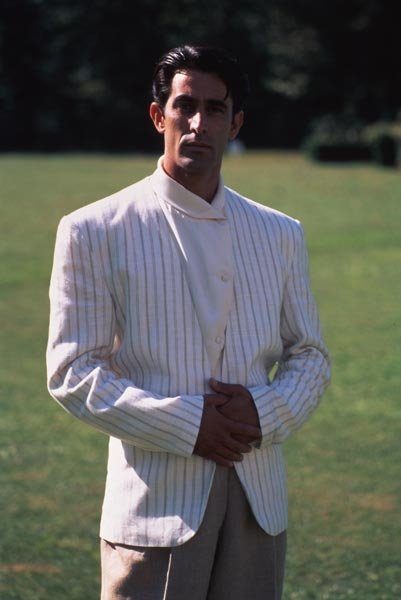


Chapter 6 · 1995–2004
Costume, Uniform and the Stage
6
Recognisable at a glance, in two cultures, without costume.
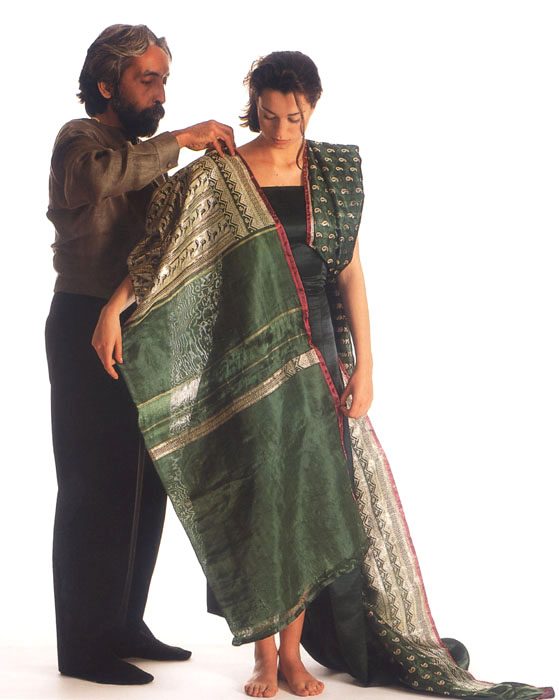
For the new international airport, the World Trade Center, the BNU and BCM-Asia, he designed most of the uniforms a visitor to 1990s Macau would have met — and, in 2004, academic dress for the Inter-University Institute: a European gown rethought for a Chinese city.
In 1997, as artistic director of the 8th Macau Arts Festival, he opened it with O Som do Leque — The Sound of the Fan — a transcultural ballet choreographed by Vasco Wellenkamp, for which he designed set, costumes, programme and poster, and taught the dancers aikido.

Plate 6.1 — Colecção Criador: design drawing after the Edo kamishimo. Ink on paper.



7
Chapter 7 · 1972–2002
Interiors and the Unbuilt

Plate 7.1 — O Trono. From Desassamblages, IPOR, Macau, 1998.
Rooms understood as pages.
Art director of the Hyatt Regency Macau; interiors for the PAK YUN restaurant in Estoril; an intercultural furniture project; Desassamblages at the IPOR in 1998.
And the proposals that outlived their institutions: an arts centre that had to be “above language” to reach every community (1977), a numismatic museum, a Southeast Asian fashion festival, a Center of Creativity — “a place of intelligence” — for a Macau whose future he saw in ideas.


Chapter 8 · 1983–2016
Photography
8
Constructed before they are taken — in the moments before sleep.
Albums across three decades: Enquadramentos (1983), Portugal à Beira da Estrada (1986), Visões (1990), Envolvências (1993), Macrocosmos (2008), Primum Lumen, the primordial light (2008), Trânsitos (2013) and Territórios (2014).
Sequences rather than records. In Macau, an old window in a back street can begin a theme whose end he does not yet know.

Plate 8.1 — From Primum Lumen, 2008. Photograph.


9
Chapter 9 · 1976–2026
Writing

Plate 9.1 — Revista de Cultura: A Mulher em Macau e na China. Cover.
The last practice to be collected, and the one that continues.
Columns for the Portuguese-language press of Macau: Lugar de Cidadania, Entreposto, Conversas do Chá e do Café, Roteiro de um Cidadão, Urbanidades. Essays for the Revista de Cultura; lectures on Silva Mendes, Afonso de Albuquerque and the Macanese.
Three books: Conversas do Chá e do Café (2011), Escritos de Amor e Desafecto (2015) and Quotidianos (2018), each launched twice — in Macau and in Lisbon — in the manner of a community that lives in two places.


António Conceição Júnior, 1993. Photograph.
The Macanese Game
“The Macanese is always awake to the other. Knowing the other — his equal, differently equal — he is the point, the hinge, the articulating element between two worlds. The decipherer of Macau.”
From the recorded interviews, 1998.
Fortune
10 avos, 1982
Prosperity
20 avos, 1982
Longevity
50 avos, 1982
Macau had two cultures. One face of the coin was spoken for by the Portuguese state, so the other had to belong to the other culture — and the two faces had to be one thing: a bridge that could not be broken.
A chronological path
A chronological path, after the revised edition of 50 e Mais Anos de CriActividade, October 2026. The years in Macau form its core; the Porto years are given briefly.
Born 6 December at the Hospital de São Rafael, Macau, to Deolinda da Conceição — journalist, writer, author of Cheong-Sam · A Cabaia — and António Maria da Conceição, teacher and national relay champion for Sporting.
Death of his mother.
To Portugal, aged twelve, to a college in Monte Estoril.
Directs, draws and writes a youth page in Notícias de Macau, aged fourteen.
First solo exhibition in Macau: caricatures and oil paintings.
Enters the Lisbon School of Fine Arts, with Fernando Calhau and Julião Sarmento. Engraving under João Hogan.
First work edited by the Gravura cooperative; collective exhibition.
Military service in Macau. Mural panel for the Banco Comercial de Macau. Engraving and silkscreen exhibition, Hotel Lisboa. Teaches visual education at the Liceu Nacional Infante D. Henrique.
Completes Fine Arts and Design at ESBAL with distinction. Collective exhibition, Galeria S. Francisco, with Calhau and Sarmento.
Wong Fei Hong · Vento de Shantung, Edibanda. Represents Portugal at the 12th International Comics Congress, Lucca.
Returns to Macau at the invitation of Governor Garcia Leandro; surveys the territory’s cultural situation and proposes an arts centre.
Curator of the Museu Luís de Camões. Launches ARTIS.
First restoration of the museum with the Gulbenkian. Chairs the executive committee of the Quinzena de Macau, Lisbon; co-curates Macau · 400 Anos de Oriente.
Reopens the museum with Macau’s first temporary exhibition gallery. First cultural exchange agreement between Macau and Hong Kong.
Acrylics, Myths and Frames, Hong Kong Arts Centre. First exhibition of contemporary Portuguese engraving in Macau.
Designs the circulating coinage and the lunar-sign commemoratives — reissued three times in silver, gold and platinum. The 24-stamp base issue and five special collections. Banknote design at Bradbury Wilkinson.
Art director, Hyatt Regency Macau. Enquadramentos, first photographic album. Interiors of PAK YUN, Estoril.
Director of Recreational and Cultural Services, Leal Senado. Founds the Macau Designers Association and is elected president. Guangzhou gives fifty antique pieces to the museum.
XXV anniversary cycle of the museum. Opens Classic Harmony, a tailoring boutique.
Portugal à Beira da Estrada, second album. Decorates the Melbourne Hyatt art hotel. The Last Hundred Years of Portuguese Painting, with the Gulbenkian.
First Collective Exhibition of Macau Designers — the territory’s first fashion designer. Two Museion grand prizes for the museum.
Cultural adviser to Governor Carlos Melancia; heads the Macau Cultural Complex Office.
First survey of the cultural appetites of Macau’s population; implementation plan for the Cultural Centre.
Visões, third album. Macau Past and Present at the Gulbenkian; Macau Sortilégio at the Macau Mission. First collection, The East Route, Casino Estoril.
Samarkand · The Consecration of Spring, best collection at Expowear; shown at Europalia 91, Brussels. Hábito · Memórias a Oriente, Gulbenkian Modern Art Centre.
Mandhala · Top of the World, dedicated to Tibet, Expowear.
Macau · The Silk Route, Palace of Queluz. Nam Ban at Serralves. Envolvências, fourth album, Gradiva. Director of the Macau Forum. Member of the Sociedade Nacional de Belas-Artes.
Mother China, Beijing; Amrhitsar, Dalian. Honorary fashion consultant to both cities.
Namasté. AICA congress in Macau: Tàpies, the Manuel de Brito collection, Shiwan ceramics, Metamorphoses of the Void. Uniforms for the airport, the World Trade Center and BNU. Lifetime honorary president of the Designers Association.
Macau · The Invention of Landscape. Seminar on aikido and the encoding of the body, Lisbon Dance School. Intercultural furniture project.
Artistic director of the 8th Macau Arts Festival; O Som do Leque opens it. Paula Rego in Macau. RTP broadcasts Prazer de Criar. Unanimous praise from the Macau City Council.
Leaves public service; founds his design and consultancy firm. Lugar de Cidadania in Ponto Final. The Body’s Soul, Hong Kong. Desassamblages, IPOR.
Wins the competition for the Medal of the Transfer of Sovereignty. Cultural consultant to the Macau Cooperation and Development Foundation. Co-founds A.M.E.D.A.F.O.
Photographic survey of Ping Yao. Writes Brumas do Kamogawa in Kyoto. Consultant to the Museu de Arte de Macau.
Chairs the Creative Cities seminar at the XVII UCCLA meeting. Designs Visions of China for Brown University and Hong Kong University Press. BLADESIGN, sword design.
Lectures at the Museu de Arte de Macau. Entreposto in Macau Hoje. Symbolism and Space for the CEM — the competition is cancelled.
Curates the George Smirnoff centenary. Presents a Discovery Channel documentary on Macau. Jury of the 5th Macau International Design Biennial.
Lifetime Achievement Award, Macau Designers Association. Transcultural academic dress for the Inter-University Institute. IPOR XV anniversary mark.
Twenty-five-year retrospective, Polytechnic Institute of Macau. Masters of Fire.
The History of Steel in East Asia — the first exhibition in the world on the subject. Luís Demée, Tempo Diluído. Stamps for Macao Post.
Robert Doisneau exhibition. New stamp collection.
Plato in the Lands of Confucius, works from the Louvre. Macrocosmos and Primum Lumen. Cover for the reissue of his mother’s A Cabaia.
President of Sporting Clube de Macau. Primum Lumen in Porto. Selection jury, Venice Biennale.
Wong Fei Hong reissued in Macau. Honorary consultant for Shiwan ceramics.
First stamp issue of the year for Macao Post. Conversas do Chá e do Café, first book.
Trânsitos, album and exhibition. Sporting Clube de Macau, second-division champions.
Territórios, seventh album and exhibition.
Escritos de Amor e Desafecto · Crónicas de Cidadania. Urbanidades in Hoje Macau.
Territórios at the Macau Scientific and Cultural Centre, Lisbon.
Quotidianos, launched in Macau and Lisbon. Lecture on Afonso de Albuquerque.
Lectures at the Rui Cunha Foundation. Moves to Porto.
Returns to writing and painting. Five book covers by invitation.
Filmed for the documentary Mais Vale Nunca que Tarde.
Member of the Sociedade de Geografia de Lisboa. Writes for Olhar Macau pelos Livros. Returns to the portrait and to painting.
Writings
Sixty-three texts, one archive
Enter the archive →
Júlio Pomar, o suave rebelde
As if by coincidence, I glanced at the clock last night. It was 01:57 and, drowsy, I put on the headphones that lie close by to listen to the news on Antena 1. The bulletin opened with sad news: Júlio Pomar had died at the age of 92. I looked at…
I ara Puig? E agora Puig?
They swear blind that “Cristòfor Colom ès el nostre” and that “la independència de Portugal ha afectat a la nostre”, even though other kingdoms, such as Castile, Navarre and Aragon, had become independent. The question of independence arose when…
O Síndroma do Ken Lee
The medium is the message. This is merely to say that the personal and social consequences of any medium – that is, of any extension of ourselves – result from the new scale that is introduced into our affairs by each extension of ourselves…
Offices held
1978–1997
1978–1997
1979–1980
1982–1985
1982–1984
1982–1984
1984–1997
1984–1995
1988
1988–1991
1993–1997
1994
1997
1998
2000
2002–2004
Prizes
Grand Prix
Museion — two grand prizes for exhibitions and catalogues, The Last Hundred Years of Portuguese Painting
1st Prize
Macau cleaning campaign — project and logotype
1st Prize
Logotype, Macau Forum
1st Prize
Logotype, Macau Airport Company
1st Prize
Medal, Instituto Cultural de Macau
1st Prize
Medal, Transfer of Sovereignty of Macau, 1999
2nd Prize
Poster, XXV Macau Grand Prix
Award
Lifetime Achievement, Macau Designers Association, 2004
“A public servant of the territory in the noblest sense of the word — one who brought to public service the excellence of private creation.”
A former president of the Leal Senado.
Selected clients
Documentary · In production
Better never than late. A documentary on the life and work of António Conceição Júnior, filmed in Porto and in Macau and directed by his son, António — the twelve-year-old who appears beside him in Prazer de Criar, 1997.
Alongside it, the monograph António Conceição Júnior · Works 1965–2025, in Portuguese, English and Traditional Chinese, is in preparation.
From the archive · VHS tapes
On tape
Excerpts from the VHS tapes the artist kept: runway shows, interviews and television reports, mostly from the 1990s. Hover to preview; click to watch with sound.
Short excerpts, digitised from VHS. Television programmes © their broadcasters (RTP, TDM).